
The No-Nonsense Guide to Teaching Students Study Habits That Actually Stick

If you’ve spent any time in a classroom, you’ve seen it: capable students underperforming not because they lack ability, but because they lack structure. They cram, reread, and hope for the best. And then they’re surprised when it doesn’t work.
Here’s the uncomfortable truth—most students are never explicitly taught how to study. They’re told to “review,” “practice,” or “prepare,” but the mechanics are missing.
This guide is for educators who want to change that. Not with theory-heavy frameworks, but with practical, teachable systems students can actually stick to.

Why Students Struggle With Study Habits
Students don’t fail because they’re lazy. They fail because their habits are built on guesswork.
Common patterns you’ll recognize:
- Passive review: Highlighting and rereading instead of thinking.
- Last-minute cramming: No spacing, no retention.
- No structure: “Study more” without knowing how.
- Low transfer: They can recognize answers but can’t produce them.
As teachers, the goal isn’t just to deliver content—it’s to teach students how to engage with it effectively.

Step 1: Teach Systems, Not Just Expectations
Telling students to “study” is vague. Teaching them a repeatable system is actionable.
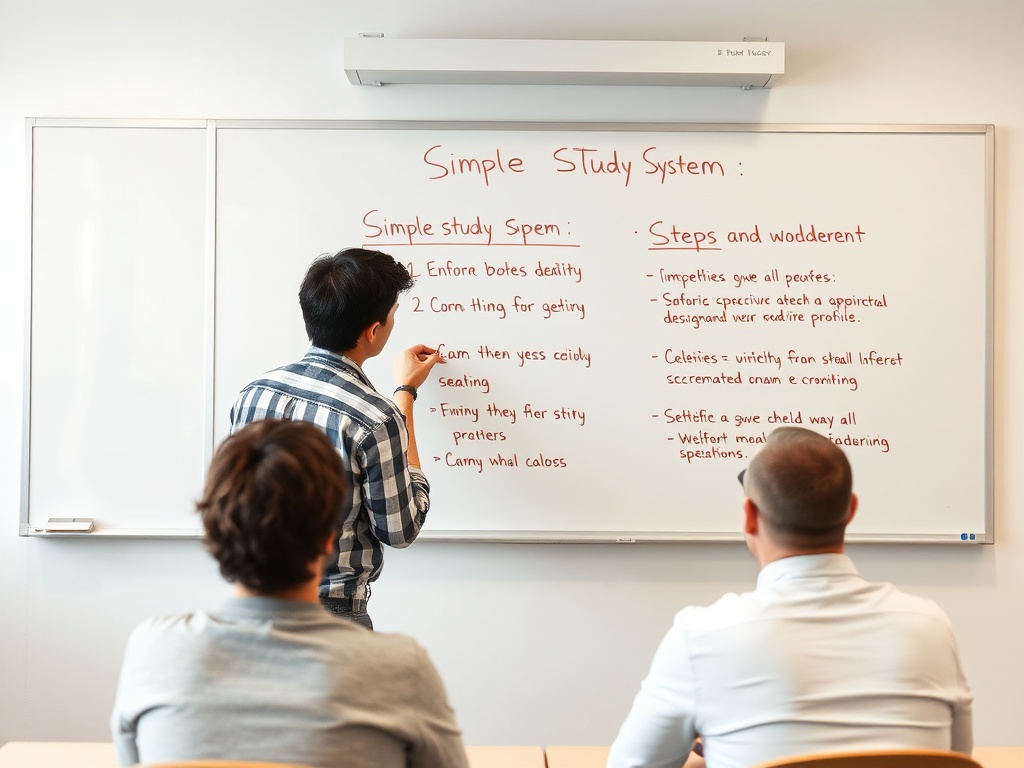
Introduce simple rules in your classroom:
- Every study session starts with recall, not reading.
- Students must generate answers before checking notes.
- Every lesson ends with a quick self-test.
These systems remove ambiguity. Students no longer guess what studying looks like—they follow a process.
Step 2: Model Active Recall in Class
If students don’t see it, they won’t do it.
Instead of reviewing slides, pause and ask students to retrieve information without prompts. Use:
- Cold calling (low-stakes, supportive)
- Quick write-from-memory exercises
- Mini quizzes without notes
Normalize the discomfort. Make it clear that struggling to recall is part of learning—not a sign of failure.

Step 3: Build Spaced Practice Into Your Teaching
Spacing shouldn’t be optional—it should be embedded in your instruction.
Instead of teaching a topic once and moving on:
- Revisit key concepts in later lessons
- Start classes with retrieval from previous units
- Use cumulative quizzes
This reinforces memory without requiring students to independently manage complex review schedules.
Step 4: Reduce Friction for Good Habits
Students often know what they should do—but barriers get in the way.
Make good habits easier:
- Provide guided note templates
- Give structured review questions
- Offer clear examples of effective study sessions
At the same time, reduce distractions in-class so students experience focused work firsthand.

Step 5: Teach Students How to Track Progress
Students often equate time spent with effectiveness. That’s a mistake.
Show them how to track:
- What they can recall without help
- Which topics they consistently miss
- How their accuracy improves over time
This builds metacognition—students start to understand their own learning, not just complete tasks.

Step 6: Introduce the “Minimum Viable Study Routine”
Students need a fallback plan. Otherwise, one bad day turns into a lost week.
Teach a simple baseline:
- 10–15 minutes of recall practice
- Review one key concept
- Answer a few targeted questions
This keeps momentum alive without overwhelming them.

Step 7: Align Study Habits With Assessment
Students default to what’s rewarded. If your assessments emphasize recall and application, their study habits will follow.
Design tests that require:
- Explanation, not recognition
- Application in new contexts
- Structured thinking, not memorized patterns
This creates alignment between teaching, studying, and evaluation.

Step 8: Keep It Simple Enough to Stick
Students don’t need ten strategies. They need two or three that they actually use.
Focus on:
- Active recall
- Spaced practice
- Consistent short sessions
Reinforce these repeatedly until they become automatic.

Final Thoughts: Teaching Habits Is Teaching Success
Content matters, but habits determine outcomes.
When you teach students how to study effectively, you’re giving them a skill that extends beyond your classroom. They become more independent, more confident, and more capable of handling complex material.
And perhaps most importantly—they stop relying on luck.